Maria is an intake coordinator. She does not provide legal advice.
Distal radius fracture
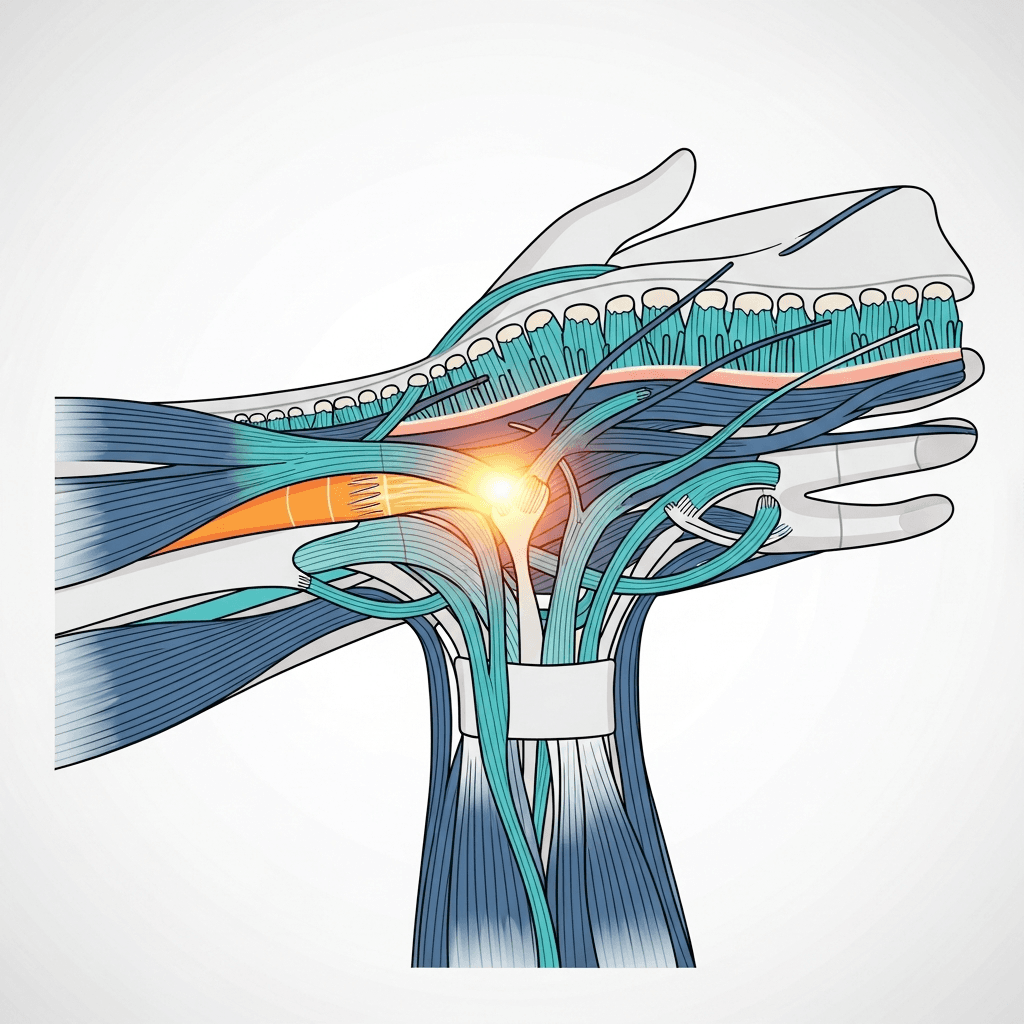
Typical Treatment
Immobilization with a cast or splint to keep the bones in proper position while healing, Surgery to realign bone fragments and secure them with plates, screws, or pins, Physical therapy to restore strength, flexibility, and range of motion, Pain management with medication and anti-inflammatory treatments, Occupational therapy to help regain function for daily activities, Follow-up X-rays to monitor bone healing progress
Recovery Timeline
Often 6-12 weeks for the bone to heal, though complete recovery of strength and flexibility may take several months or longer
Common Accident Causes
Wrist fractures often happen when people instinctively put their hands out to brace against the steering wheel, dashboard, or airbag during impact, causing the wrist to bend backward beyond its normal range.
Impact Speed Range
May occur at speeds as low as 15-40+ mph
Common Collision Types
Head-on, Rear-end
During a car accident, people instinctively extend their arms to brace for impact. When hands hit the steering wheel, dashboard, or airbag, tremendous force travels up through the palm and into the wrist bones. This often causes the wrist to bend backward far beyond its normal range of motion.
The position of the hand at impact determines which bones break. If the palm hits first with the wrist bent back, the radius bone in the forearm often fractures near the wrist joint. Side-impact crashes can cause different fracture patterns as the wrist twists unnaturally.
High-energy crashes can cause multiple bone breaks or crush injuries. Even in lower-speed collisions, the sudden stopping force combined with the body's forward momentum can generate enough pressure to crack the smaller bones within the wrist joint itself.
No upfront fees. No fee unless we recover money for you.
We'll get back to you as soon as possible.
(480) 899-9019 — free consultation
Doctors typically start with X-rays to see exactly which bones are broken and how severely. Simple fractures that haven't shifted out of place often heal well with a cast or removable splint. The wrist stays immobilized for several weeks while new bone tissue forms to bridge the break.
More complex fractures may require surgery to realign the bone pieces properly. Surgeons use metal plates, screws, or pins to hold everything in the correct position during healing. Some cases need external fixation, where metal pins extend outside the skin and connect to an external frame.
After the bone heals, physical therapy helps restore normal movement and strength. The wrist joint can become very stiff after weeks of immobilization, so guided exercises gradually rebuild flexibility. Some people also work with occupational therapists to relearn daily activities and workplace tasks.
Sometimes what initially appears to be a simple wrist fracture turns out to involve damage to nearby structures. Small bone fragments can shift and pinch nerves, causing numbness or weakness in the fingers that doesn't improve with time. Damage to the blood supply of certain wrist bones can lead to slow healing or bone death.
Long-term complications can develop months after the initial injury. The wrist joint may develop arthritis if the fracture surfaces don't heal perfectly smooth. Some people experience ongoing stiffness, weakness, or chronic pain that interferes with work and daily activities. Complex regional pain syndrome, though uncommon, can cause severe ongoing pain and sensitivity even after the bone has healed.
Clinical terminology for medical and legal professionals
A wrist fracture involves a break in one or more of the ten bones comprising the wrist and distal forearm, including the distal radius, distal ulna, and eight carpal bones (scaphoid, lunate, triquetrum, pisiform, trapezium, trapezoid, capitate, and hamate). The most common wrist fracture is a distal radius fracture, often presenting as a Colles' fracture with dorsal angulation and displacement. These injuries are classified using various systems including the AO/OTA classification for distal radius fractures. ICD-10 codes include S62.10 (fracture of unspecified carpal bone) and S52.50 (unspecified fracture of the lower end of radius). Treatment may range from closed reduction and casting to open reduction and internal fixation (ORIF) with plates, screws, or external fixation depending on fracture pattern, displacement, and patient factors.
Just been in an accident? See our step-by-step guide →
No upfront fees. No fee unless we recover money for you.
We'll get back to you as soon as possible.
(480) 899-9019 — free consultation
From the Blog: Learn more about protecting your rights in our Arizona injury law blog.
