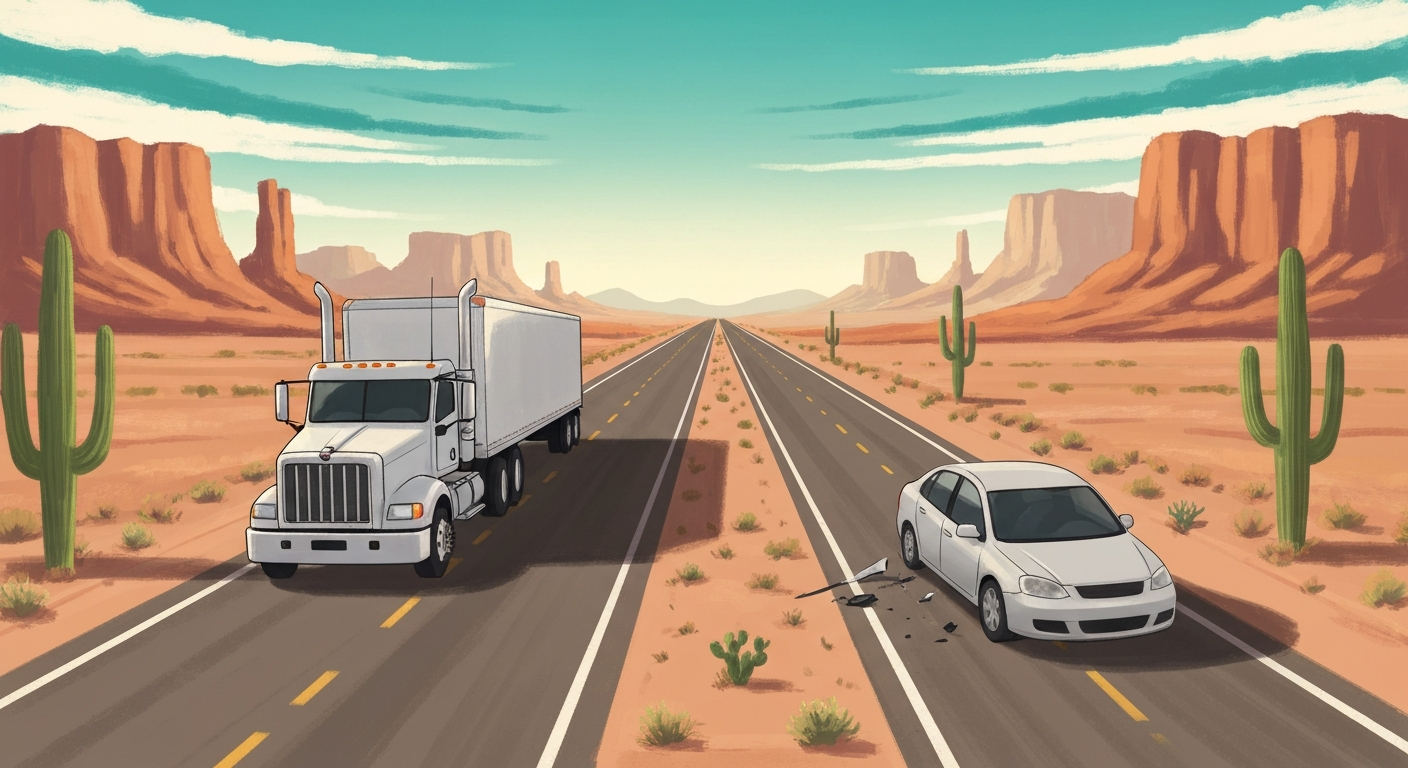
Truck accidents typically involve multiple liable parties including drivers, trucking companies, and manufacturers
Federal regulations and specialized evidence like driver logs create additional complexity in truck cases
Arizona's two-year statute of limitations applies to both truck and car accident claims
Truck accidents generally result in more severe injuries and higher damages due to vehicle size and weight
Specialized legal expertise is crucial for navigating truck accident claims successfully
When accident victims face the aftermath of a collision in Arizona, the type of vehicle involved significantly impacts the legal process ahead. While both truck and car accidents can result in serious injuries and financial losses, truck accident lawsuits present unique complexities that distinguish them from typical passenger vehicle cases. Understanding these differences helps accident victims and their families prepare for the legal journey and make informed decisions about their claims.
Severity of Injuries and Damages
The physical consequences of truck accidents typically far exceed those of car accidents due to the substantial size and weight differences between commercial trucks and passenger vehicles. Commercial trucks can weigh up to 80,000 pounds when fully loaded, compared to the average passenger car weight of approximately 4,000 pounds.
Impact on Injury Severity
This dramatic weight disparity means truck accidents often result in catastrophic injuries including traumatic brain injuries, spinal cord damage, multiple fractures, and internal organ damage. Car accidents, while still potentially serious, generally involve less severe injuries due to the more comparable sizes of the vehicles involved.
The severity of injuries directly influences the complexity and value of personal injury claims. Truck accident victims frequently face longer recovery periods, extensive medical treatment, and permanent disabilities that require ongoing care. These factors contribute to higher medical expenses, lost wages, and pain and suffering damages.
Property Damage Considerations
Property damage in truck accidents typically exceeds that of car accidents. The force generated by a collision involving a commercial truck often results in total vehicle destruction and damage to surrounding property, infrastructure, or multiple vehicles in multi-car pileups.
Multiple Parties and Complex Liability
One of the most significant differences between truck and car accident lawsuits lies in the number of potentially liable parties involved. Car accidents typically involve straightforward negligence cases between two drivers and their insurance companies.
Identifying Liable Parties in Truck Accidents
Truck accident cases often involve multiple defendants, creating a more complex legal landscape. Potentially liable parties may include:
Free Case Review
No upfront fees. No legal fees unless we recover money for you.
Each party may bear responsibility for different aspects of the accident, requiring thorough investigation to determine fault and liability percentages under Arizona's comparative negligence laws.
Corporate Defendants and Insurance Coverage
Trucking companies typically carry significantly higher insurance coverage limits than individual car owners, often ranging from $750,000 to several million dollars per incident. While this potentially means more compensation available for accident victims, it also means facing well-funded corporate defendants with experienced legal teams dedicated to minimizing payouts.
Federal Regulations and Compliance Issues
Truck accident lawsuits involve layers of federal regulations that do not apply to car accidents, adding complexity to the legal process and evidence gathering.
Federal Motor Carrier Safety Administration (FMCSA) Rules
Commercial truck drivers and trucking companies must comply with extensive FMCSA regulations covering:
Hours of service limitations
Vehicle maintenance requirements
Driver qualification standards
Drug and alcohol testing programs
Electronic logging device (ELD) requirements
Violations of these federal regulations can serve as evidence of negligence in truck accident lawsuits, providing additional avenues for establishing liability that are not available in car accident cases.
Specialized Evidence Requirements
Truck accidents involve unique types of evidence that require specialized knowledge to obtain and interpret. This evidence includes:
Electronic logging device data
Driver qualification files
Vehicle maintenance records
Cargo loading documentation
GPS tracking information
Black box data from commercial vehicles
The preservation and analysis of this evidence requires immediate action and specialized expertise, as trucking companies may quickly move to limit access or preserve evidence in ways that favor their interests.
Arizona Legal Framework and Procedural Differences
While Arizona's fundamental personal injury laws apply to both truck and car accidents, certain procedural and practical differences exist in how these cases progress through the legal system.
Statute of Limitations
Arizona maintains a two-year statute of limitations for personal injury claims arising from both truck and car accidents. However, the complexity of truck accident cases often requires more extensive investigation time, making early legal consultation particularly crucial for accident victims.
Damage Caps and Compensation
Arizona does not impose strict caps on damages in personal injury cases, allowing accident victims to pursue full compensation for their losses. In truck accident cases, this becomes particularly significant given the typically higher damages involved, including extensive medical expenses, long-term care costs, and substantial lost earning capacity.
Expert Testimony Requirements
Truck accident lawsuits frequently require expert testimony from accident reconstruction specialists, trucking industry experts, medical professionals, and economic experts to establish liability and quantify damages. Car accident cases may involve expert testimony but typically require fewer specialized experts.
Frequently Asked Questions
How long do truck accident lawsuits typically take compared to car accident cases?
Truck accident lawsuits generally take longer to resolve than car accident cases due to their increased complexity. While car accident cases might settle within months or a year, truck accident cases often require 18 months to several years to reach resolution, depending on the severity of injuries, number of parties involved, and complexity of liability issues.
What makes truck accident cases more expensive to pursue?
The higher costs stem from extensive evidence gathering, multiple expert witnesses, complex federal regulation analysis, and lengthy litigation against well-funded corporate defendants. These cases require specialized attorneys with experience in trucking regulations and access to industry experts, accident reconstructionists, and medical specialists.
Can accident victims handle truck accident claims without specialized legal representation?
Accident victims should not attempt to handle truck accident claims without experienced legal representation due to the complex federal regulations, multiple liable parties, and sophisticated defense strategies employed by trucking companies. The specialized knowledge required to navigate these cases effectively makes professional legal assistance essential for protecting victims' rights and maximizing recovery potential.