Maria is an intake coordinator. She does not provide legal advice.
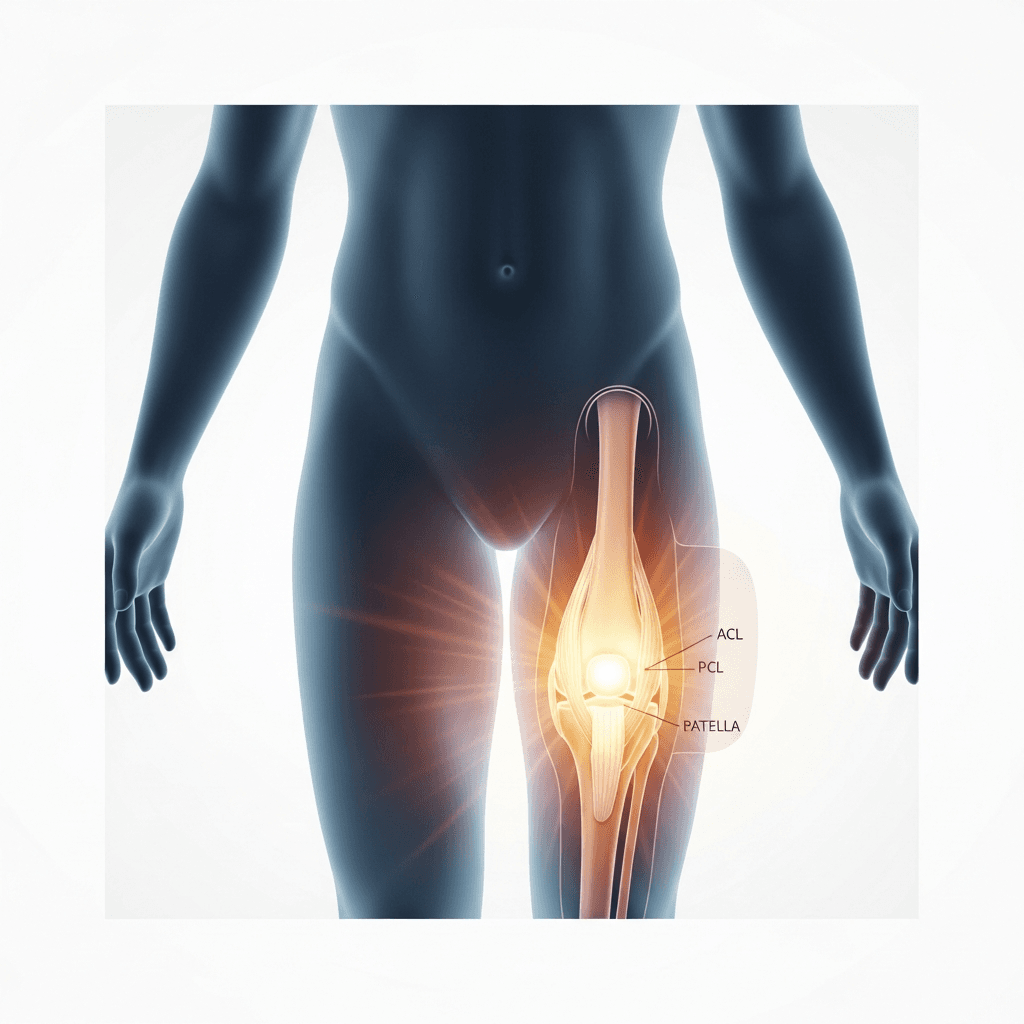
Anterior cruciate ligament tear
Typical Treatment
Rest and avoiding activities that stress the knee, Ice packs to reduce swelling and pain, Knee braces to provide support and stability, Physical therapy to rebuild strength and movement, Surgery to repair or reconstruct completely torn ligaments, Pain medications like ibuprofen to manage discomfort
Recovery Timeline
Often 3-6 months for partial tears, though complete tears requiring surgery may take 9 months or longer
Common Accident Causes
Knee ligament tears often happen when the knee gets twisted or bent in an unnatural direction during impact, or when the leg gets trapped while the body keeps moving forward.
Impact Speed Range
May occur at speeds as low as 20-50+ mph
Common Collision Types
Head-on, Side-impact
Knee ligament tears often happen during the sudden stopping and twisting motions that occur in car crashes. When a vehicle comes to an abrupt halt, passengers can get thrown forward while their legs remain planted, creating dangerous twisting forces on the knee joint.
Side-impact collisions can be particularly hard on knee ligaments. The force can push the lower leg in one direction while the thigh goes another way, stretching or tearing the bands that hold the knee together. Sometimes the knee gets crushed against the dashboard or door, creating direct trauma.
Rear-end crashes can also cause ligament damage when people brace their feet against the floor during impact. The sudden acceleration can create forces that bend or twist the knee beyond what the ligaments can handle, especially if the foot gets caught under a pedal or seat.
No upfront fees. No fee unless we recover money for you.
We'll get back to you as soon as possible.
(480) 899-9019 — free consultation
Doctors often start with non-surgical approaches for many knee ligament tears. This typically includes rest, ice, compression, and elevation to control swelling and pain. Many people get fitted for a knee brace to provide stability while the ligament heals, and physical therapy usually plays a big role in recovery.
For complete tears, especially of the ACL (anterior cruciate ligament), surgery may be necessary to restore knee stability. Surgeons can repair the torn ligament or reconstruct it using tissue from elsewhere in the body. The choice often depends on the person's age, activity level, and which ligament got damaged.
Recovery varies widely between people and depends on many factors. Some folks with partial tears can return to normal activities in a few months with proper rehabilitation, while others facing complete tears and surgery may need much longer to fully heal.
Sometimes knee ligament tears are more complex than they first appear. What seems like a simple sprain might actually involve damage to multiple ligaments, the cartilage, or other structures inside the knee joint. People sometimes develop chronic instability, where the knee continues to feel wobbly or gives out during normal activities.
Without proper healing, some individuals face long-term challenges like ongoing pain, stiffness, or an increased risk of future knee problems. The knee joint may develop arthritis earlier than normal if the injury disrupts the normal mechanics of how the bones move together during walking and other activities.
Clinical terminology for medical and legal professionals
Knee ligament injuries involve damage to one or more of the four primary stabilizing ligaments: the anterior cruciate ligament (ACL), posterior cruciate ligament (PCL), medial collateral ligament (MCL), and lateral collateral ligament (LCL). These injuries range from Grade I sprains (minor stretching) to Grade III complete ruptures. ACL tears are particularly common in high-energy trauma and rotational injuries, often presenting with hemarthrosis and positive Lachman or anterior drawer tests. PCL injuries typically result from posterior tibial translation forces. Collateral ligament injuries involve valgus (MCL) or varus (LCL) stress mechanisms. Diagnostic imaging may include MRI to assess ligament integrity and associated meniscal or chondral damage. Treatment ranges from conservative management with bracing and physical therapy to surgical reconstruction, particularly for complete ACL ruptures in active individuals.
Just been in an accident? See our step-by-step guide →
No upfront fees. No fee unless we recover money for you.
We'll get back to you as soon as possible.
(480) 899-9019 — free consultation
From the Blog: Learn more about protecting your rights in our Arizona injury law blog.
