Maria is an intake coordinator. She does not provide legal advice.
ACL tear
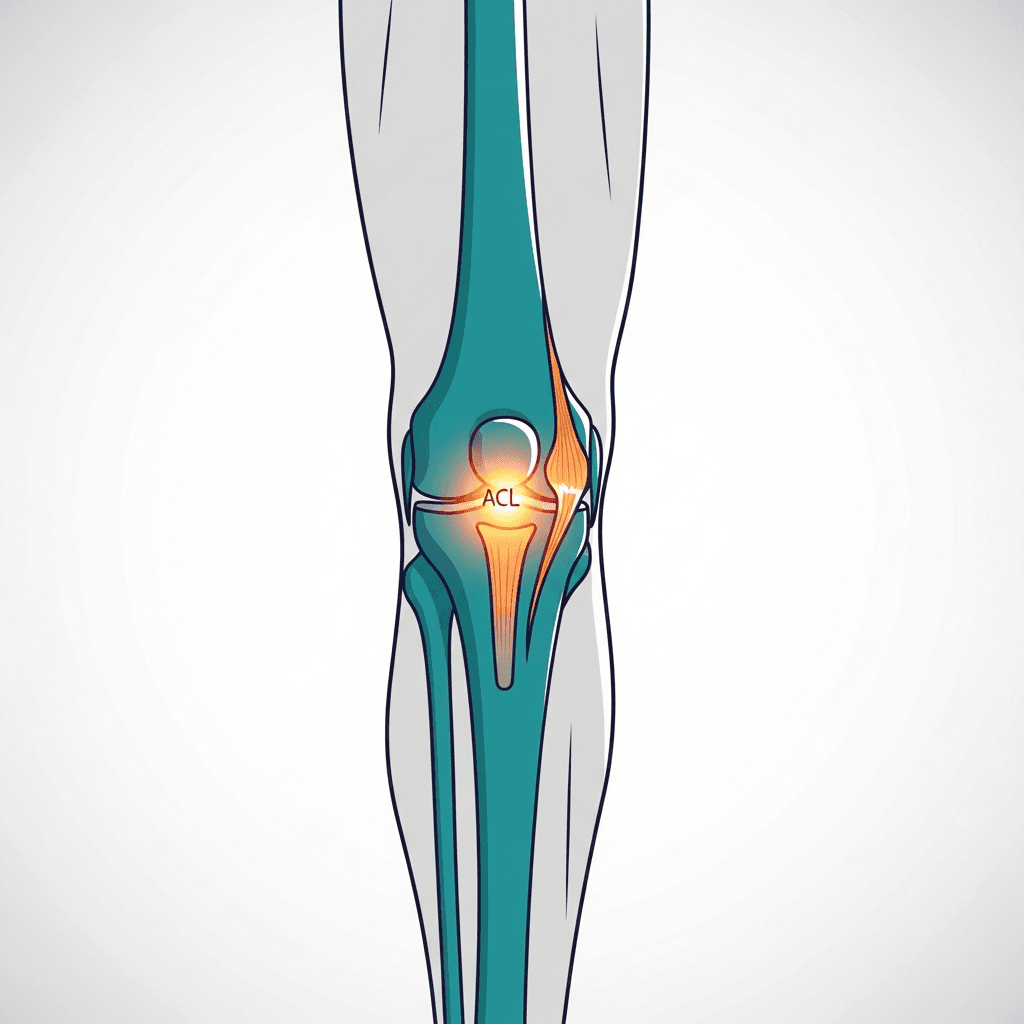
Typical Treatment
MRI imaging and diagnostic arthroscopy, ACL reconstruction surgery, Physical therapy and rehabilitation, Pain management and anti-inflammatory medications, Knee bracing and mobility aids, Follow-up orthopedic care
Recovery Timeline
9-12 months with surgical reconstruction, 3-6 months for partial tears with conservative treatment
Common Accident Causes
Occurs when the knee is forced into unnatural positions during impact, such as when legs are braced against floorboards during frontal collisions, or when the body twists while the foot remains planted during side-impact crashes
ACL tears in vehicle accidents typically result from high-impact forces that cause the knee to hyperextend or rotate beyond its normal range of motion. During frontal collisions, occupants often brace their legs against the dashboard or floorboard, creating tremendous stress on the knee joint when the vehicle suddenly decelerates. The anterior cruciate ligament, which prevents the tibia from sliding forward relative to the femur, can rupture under these extreme forces.
Side-impact collisions present another common mechanism for ACL injuries, particularly when the occupant's body is thrown laterally while their foot remains planted or trapped. This creates a twisting motion that places rotational stress on the knee joint, potentially tearing the ACL along with other supporting structures like the meniscus or medial collateral ligament. The confined space of a vehicle interior often prevents natural protective responses, increasing the likelihood of severe ligamentous injury.
Rear-end collisions can also cause ACL tears when occupants are thrown forward and their knees strike the dashboard or seat in front of them. The combination of forward momentum and sudden impact can force the knee into hyperflexion or cause it to buckle sideways, overwhelming the ACL's ability to maintain joint stability.
No upfront fees. No fee unless we recover money for you.
We'll get back to you as soon as possible.
(480) 899-9019 — free consultation
Initial treatment for suspected ACL tears typically involves immediate immobilization and comprehensive diagnostic imaging, including MRI scans to assess the extent of ligamentous damage and evaluate associated injuries to the meniscus or other knee structures. Emergency care focuses on pain management, swelling reduction through elevation and ice application, and protecting the joint from further injury through bracing or splinting.
For complete ACL tears, surgical reconstruction using tendon grafts represents the standard treatment approach, particularly for patients who wish to return to active lifestyles. The procedure involves arthroscopic techniques to replace the torn ligament with harvested tissue, typically from the patient's own hamstring or patellar tendon. Post-surgical rehabilitation requires extensive physical therapy lasting 4-6 months to restore strength, range of motion, and proprioceptive function.
Partial ACL tears may sometimes be managed conservatively through intensive physical therapy, activity modification, and protective bracing. However, many partial tears progress to complete ruptures over time, particularly in younger, more active individuals. Long-term treatment planning must consider the increased risk of future meniscal tears and early-onset arthritis that commonly develop in ACL-deficient knees.
ACL tears create significant long-term complications that extend well beyond the initial injury period. Without proper surgical reconstruction, the knee joint loses critical stability, leading to episodes of the knee "giving way" during routine activities like walking on uneven surfaces or climbing stairs. This chronic instability substantially increases the risk of secondary injuries, particularly tears to the meniscus cartilage that serves as the knee's shock absorber.
Post-traumatic arthritis represents one of the most serious long-term consequences of ACL injuries, developing in up to 50% of patients within 10-15 years regardless of treatment approach. The altered biomechanics of an ACL-deficient or reconstructed knee accelerate cartilage breakdown, leading to progressive joint degeneration, chronic pain, and functional limitations. This arthritis often necessitates additional surgeries, ongoing pain management, and may eventually require total knee replacement.
Early and thorough documentation of ACL injuries proves crucial for legal proceedings because the full extent of functional impairment and future complications may not become apparent for months or years after the initial trauma. Insurance companies often underestimate the long-term impact of these injuries, making comprehensive medical evaluation and expert testimony essential for fair compensation. The injury's effect on career prospects, recreational activities, and overall quality of life requires careful documentation through functional assessments and vocational evaluations.
Just been in an accident? See our step-by-step guide →
No upfront fees. No fee unless we recover money for you.
We'll get back to you as soon as possible.
(480) 899-9019 — free consultation
From the Blog: Learn more about protecting your rights in our Arizona injury law blog.
