


You hire me. You get me.
- You talk to the lawyer, not a case manager.
- His cell phone once you hire him.
- 17+ years in Arizona law, starting as a prosecutor.
- A straight answer from the start.
Arizona pedestrian accident lawyer
No fee unless we win. The consultation is free, and your first booked call is with Henry, a former prosecutor who builds the account of what happened from the evidence, not from the driver’s version.
Text HenryFree case reviewPrefer to write? Free case review
No attorney fee without a recovery. Case costs and expenses remain your responsibility regardless of recovery.
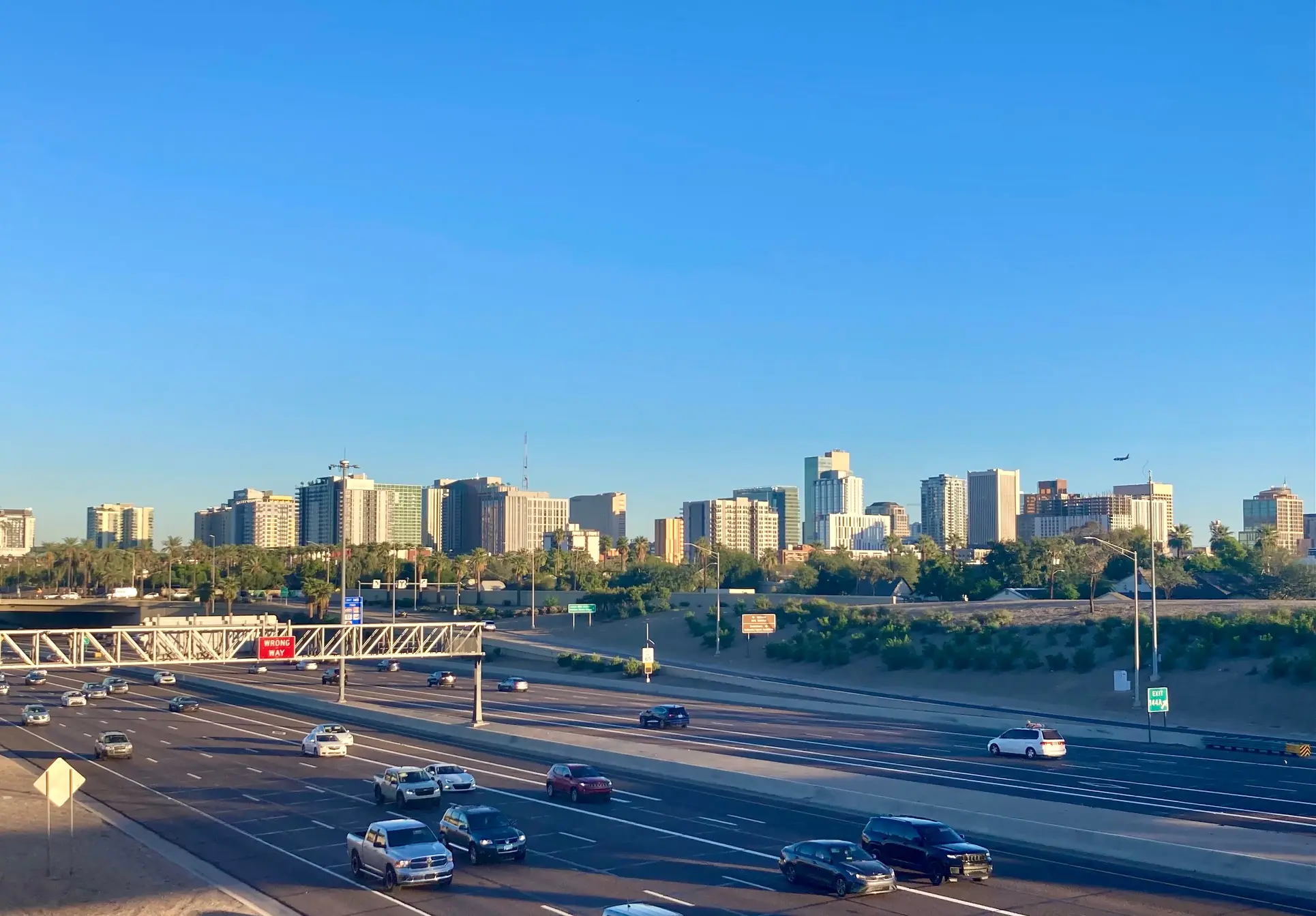
Photo: J550112, Wikimedia Commons (CC0)

Recognitions are specific to the dates shown and are not guarantees of a case outcome. Links open the issuing organizations’ websites.
A pedestrian accident claim depends on the facts—not simply whether a person was in a crosswalk. Arizona law assigns duties to drivers and pedestrians. Signals, visibility, vehicle movement, witness accounts, and medical records can help explain what happened and its impact. Henry Beam can discuss responsibility, available insurance, and the deadlines that apply.
Meet the attorney
He started his career as a prosecutor. Today he brings that background to evaluating evidence and preparing injury claims, and he handles each case himself. Once you hire him, you get his personal cell number.
No attorney fee without a recovery; case costs and expenses remain the client's responsibility regardless of recovery.
We'll get back to you as soon as possible.
(480) 899-9019 — free consultation
Case costs and expenses remain your responsibility regardless of recovery. Keep your message brief; do not send sensitive records. Sending a message does not create an attorney-client relationship.
Crossing location, visibility, driver actions, and the effects of the injury can all matter. These are some of the questions that help move a claim beyond competing accounts.
Insurance Company Calls
Adjuster requests and how claim-related communications should be handled.
Medical Records & Bills
Treatment records, medical bills, and documentation of the injury’s effects on work and daily life.
Evidence & Investigation
Reports, photographs, witness accounts, and whether further investigation would help clarify what happened.
Negotiation & Settlement
How settlement proposals compare with the evidence and the options for resolving disputed issues.
Deadlines & Paperwork
Identifying the deadlines, notices, and filings relevant to the individual claim.
Scene Investigation
Crosswalk layout, traffic signals, camera footage, and witness accounts that could help explain the collision.
A free consultation with a former prosecutor who handles your case himself.
No attorney fee without a recovery. Case costs and expenses remain your responsibility regardless of recovery.
“After going round and round with an insurance company for weeks and still getting nowhere, I contacted Henry. Within 48 hours I had a check from the insurance company. Beam Law gets results! My only wish is that I had contacted them sooner.”
Individual experiences and results vary.
5.0Read reviews on GoogleIf you were hit by a vehicle as a pedestrian, these steps can help protect your rights and your case:
Call 911 for an emergency. Seek medical evaluation and do not remain in traffic to collect evidence.
Save any report number, driver and insurance information, and correspondence about the collision.
Available photographs of crossings, signals, lighting, and vehicle positions can help explain the circumstances.
Write down how to reach people who saw the collision. Their observations may help resolve disputed facts.
Ask what information is being requested. Consider legal advice before giving a recorded statement or signing a broad release.
Henry can discuss available evidence, potential video sources, insurance questions, and what an offer or release would mean.
Start with the scene
Where each person was, the signal phase, crosswalk markings, and nearby intersections.
Lighting, parked vehicles, sight lines, weather, and other obstructions.
Turning, backing, braking, speed evidence, and the path of travel.
Witness accounts, incident reports, and nearby video that may still be available.
When responsibility is disputed
Under A.R.S. § 12-2505, ordinary comparative negligence generally reduces damages in proportion to the claimant’s fault rather than automatically barring a claim. The statute has an exception for intentional, wilful, or wanton conduct. Recovery still requires a valid claim against another party; no payment is guaranteed.
Crossing outside a crosswalk brings different right-of-way rules, but drivers still have a duty of care. Henry can discuss the facts and the rules that apply, rather than assuming either person was entirely responsible.
Recovery
The circumstances and evidence determine which losses may be recoverable. Questions to discuss include:
Timing matters
Many Arizona injury lawsuits must be filed within two years after the claim accrues under A.R.S. § 12-542. Exceptions and different rules can apply, including shorter deadlines for government claims. Ask about the deadline for your circumstances rather than relying on a general timeline.
Fault depends on the evidence and the rules that apply to the location and signals. Arizona drivers must use due care to avoid pedestrians on roadways, while pedestrians also have right-of-way obligations. Crosswalk rules have conditions; neither a collision nor a crossing location alone establishes who is responsible.
Crossing outside a marked crosswalk or an unmarked crosswalk at an intersection generally requires yielding to vehicles under A.R.S. § 28-793, and additional restrictions can apply between signal-controlled intersections. That does not erase the driver’s duty of care. Henry can discuss how the crossing rules and comparative fault apply to the evidence.
Depending on responsibility and the evidence, a claim may address medical expenses, lost earnings, effects on future work, pain and suffering, and supported future care needs. The seriousness of an injury alone does not establish the amount or availability of recovery.
Keep copies of communications and understand what the insurer is requesting. Consider legal advice before providing a recorded statement or signing a broad medical or settlement release. Henry can discuss the request and how to respond based on your circumstances.
Many Arizona injury lawsuits must be filed within two years after the claim accrues under A.R.S. § 12-542. Claims against public entities or employees generally require a notice of claim within 180 days and a lawsuit within one year after accrual under §§ 12-821.01 and 12-821. Exceptions and other rules require individual review.
Ordinary comparative negligence generally reduces damages in proportion to the claimant’s fault rather than automatically barring the claim. A.R.S. § 12-2505 has an exception for intentional, wilful, or wanton conduct. Recovery requires a valid claim against another party and is not guaranteed simply because fault is shared.
Lighting, sight lines, crossing layout, and signal operation can be relevant to understanding a collision. A possible claim involving road design or maintenance needs separate review of responsibility, defenses, evidence, and government-claim deadlines. A dangerous-looking location does not by itself establish liability.
Beam Injury Law offers a free consultation. The contingency fee is 33⅓% of the gross amount recovered if the matter resolves at or before mediation or settlement conference, whether before or after a lawsuit is filed. Filing a lawsuit alone does not increase the fee. If the matter does not resolve at or before mediation or settlement conference, the fee is 40% of the gross amount recovered, even if it later settles without a trial. The 40% rate also applies if the matter proceeds to trial or arbitration or results in a verdict, award, or judgment. No attorney fee is owed if there is no recovery. Case costs and expenses are separate and remain the client's responsibility regardless of recovery. Review the written agreement for the full terms before signing.
Still have questions?
Call our main line at (480) 899-9019 — the initial consultation is free.
Important deadlines
When the at-fault party may be a government entity — a city or county, a public school, a state agency, ADOT, a police or sheriff department, a public hospital, or a government-owned road or vehicle — Arizona imposes two deadlines that are much shorter than the general two-year period:
Missing the 180-day notice typically bars the claim entirely, regardless of how strong the case is. Accrual, exceptions, and notice requirements need case-specific review. Do not assume the incident date alone determines your deadline.
Keep reading