Maria is an intake coordinator. She does not provide legal advice.
Abdominal aortic injury
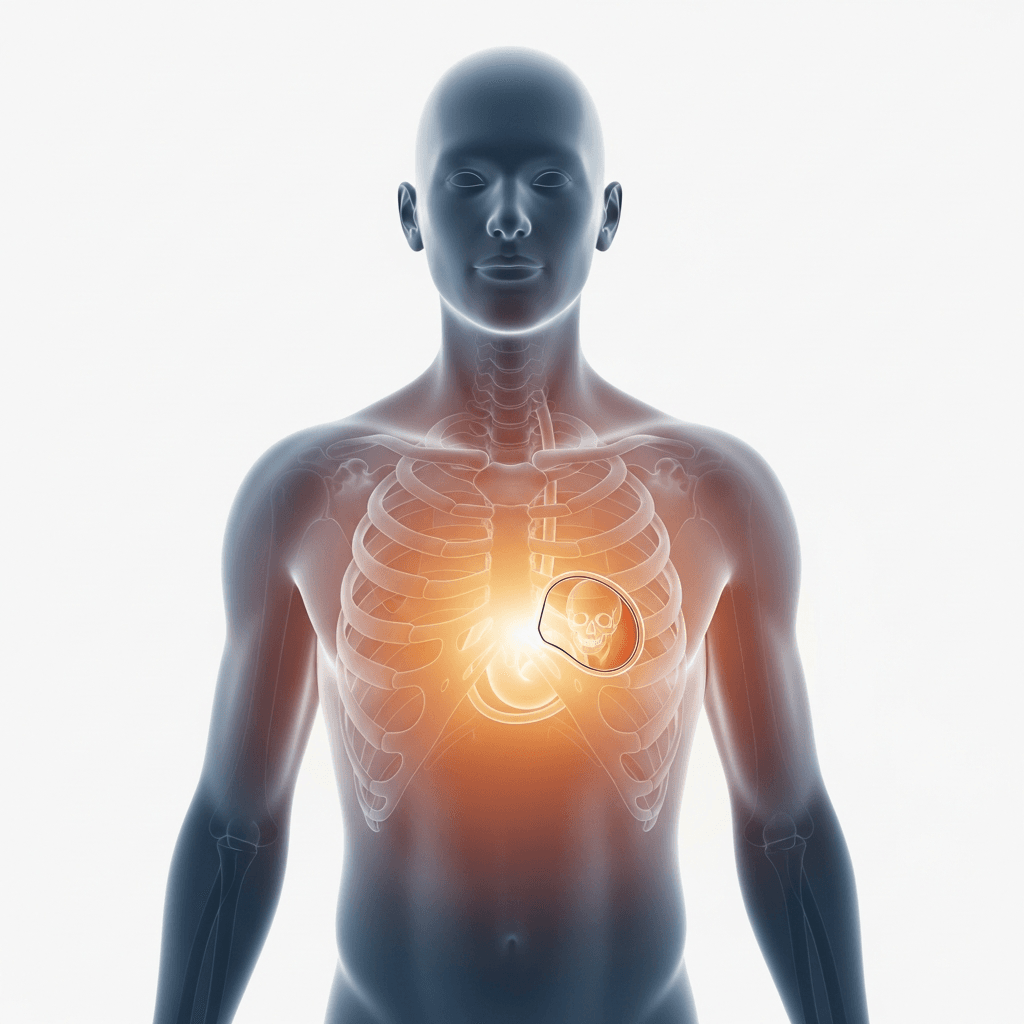
Typical Treatment
Emergency surgery to repair the torn artery, Minimally invasive stent placement to seal the injury, Blood pressure medications to reduce strain on the artery, Regular monitoring with CT scans or ultrasounds, Blood transfusions if there's significant internal bleeding
Recovery Timeline
Often 3-6 months for basic recovery, though severe cases may require ongoing monitoring for years
Common Accident Causes
The sudden stopping force in a car crash can cause the aorta to tear where it's attached to other structures, while the rest of the artery keeps moving forward.
Impact Speed Range
May occur at speeds as low as 40-60+ mph
Common Collision Types
Head-on
The aorta is the body's main highway for blood, running from the heart down through the chest and belly. In a car crash, the sudden stop creates enormous forces inside the body. The aorta is attached to the spine in some places but free-floating in others.
When a vehicle stops suddenly, different parts of the aorta move at different speeds. This can cause the artery wall to stretch, tear, or even rupture completely. High-speed crashes and side-impact collisions often create the kind of forces that can damage this vital blood vessel.
Sometimes the injury starts small - maybe just a tiny tear in the inner wall. But over time, the constant pressure of blood flowing through can make that small tear bigger, like a weak spot in a garden hose that eventually bursts.
No upfront fees. No fee unless we recover money for you.
We'll get back to you as soon as possible.
(480) 899-9019 — free consultation
When doctors suspect an aortic injury, they often start with emergency imaging tests like CT scans to see exactly where and how bad the damage is. If the tear is small and not actively bleeding, they might use medications to lower blood pressure and reduce the strain on the injured artery while monitoring it closely.
For more serious injuries, doctors can often fix the problem without major surgery using a procedure called endovascular repair. They insert a small tube (stent graft) through an artery in the leg and guide it to the injured area to seal the tear from the inside. This is less invasive than traditional surgery.
In the most severe cases, open surgery may be needed to repair or replace the damaged section of the aorta. This involves making an incision in the abdomen to directly access and fix the injured blood vessel. Recovery from any of these treatments requires careful monitoring and follow-up care.
One of the biggest concerns with aortic injuries is that they can seem minor at first but become life-threatening later. A small tear can gradually expand over days or weeks, potentially leading to massive internal bleeding. Some people feel relatively normal right after the accident, only to develop serious symptoms later.
Another worry is that even after treatment, the injured area can remain weak. This means people may need regular check-ups for years to make sure the repair is holding and no new problems are developing. Some individuals may also experience reduced blood flow to their legs or other organs if the injury affects how blood moves through the body.
Clinical terminology for medical and legal professionals
Abdominal aortic injury encompasses traumatic damage to the infrarenal or suprarenal abdominal aorta, including intimal tears, dissections, pseudoaneurysms, and complete ruptures. These injuries typically result from rapid deceleration forces causing differential movement between fixed and mobile portions of the aorta. Classification includes Grade I (intimal tear), Grade II (intramural hematoma), Grade III (pseudoaneurysm), and Grade IV (rupture with active extravasation). The injury may present as an acute traumatic aortic rupture or develop into a post-traumatic abdominal aortic aneurysm over time. Diagnosis requires CT angiography or conventional angiography, and treatment ranges from medical management and surveillance to endovascular stent grafting (EVAR) or open surgical repair depending on the severity and hemodynamic stability.
Just been in an accident? See our step-by-step guide →
No upfront fees. No fee unless we recover money for you.
We'll get back to you as soon as possible.
(480) 899-9019 — free consultation
From the Blog: Learn more about protecting your rights in our Arizona injury law blog.
