Maria is an intake coordinator. She does not provide legal advice.
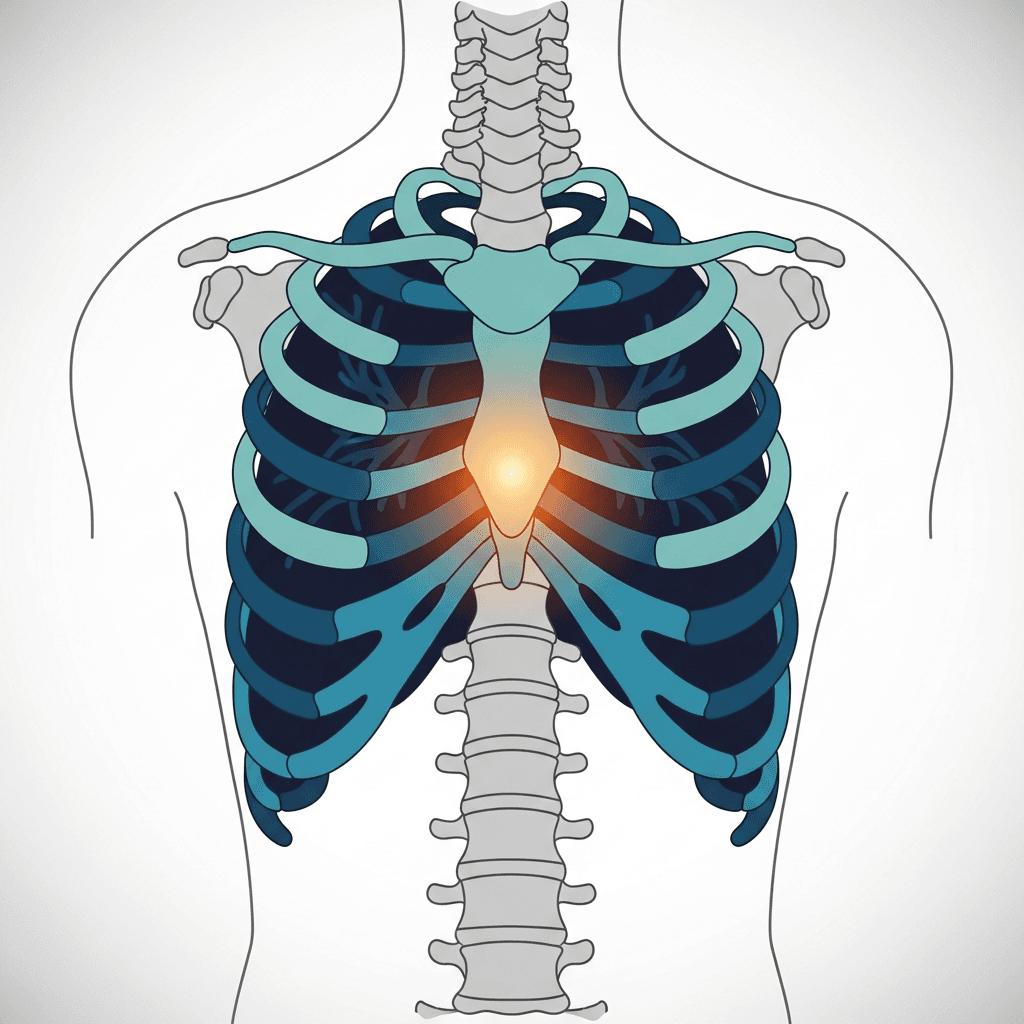
Sternal fracture
Typical Treatment
Pain medication to manage the significant chest discomfort during healing, Rest and limited activity to allow the bone to mend properly, Breathing exercises to prevent lung complications from shallow breathing, Physical therapy to restore chest and shoulder mobility after initial healing, Surgery with metal plates and screws for severely displaced fractures
Recovery Timeline
Often 10-12 weeks for the bone to heal, though chest pain may persist longer and full return to normal activities can take 3-6 months
Common Accident Causes
The chest strikes the steering wheel, dashboard, or seatbelt with tremendous force during a frontal collision, creating enough pressure to crack the thick breastbone.
Impact Speed Range
May occur at speeds as low as 25-50+ mph
Common Collision Types
Head-on
Car accidents can break the sternum when tremendous force compresses the chest. This often happens in head-on collisions when the driver's chest slams into the steering wheel or when a seatbelt locks during sudden deceleration.
The sternum is a thick, strong bone that takes significant impact to fracture. When the chest experiences this level of trauma, the breastbone may crack along its length or break completely. The same forces that break the sternum can also injure the heart, lungs, or ribs underneath.
Rear-end crashes can also cause sternal fractures if the impact forces the person forward against their seatbelt or if they brace against the steering wheel expecting collision. Side-impact crashes may cause this injury if the person is thrown across the vehicle interior.
No upfront fees. No fee unless we recover money for you.
We'll get back to you as soon as possible.
(480) 899-9019 — free consultation
Most people with broken sternums heal without surgery through careful rest and pain management. Doctors often prescribe strong pain medication since even breathing can be extremely uncomfortable. People typically need to avoid lifting, pushing, or any activities that strain the chest muscles for several weeks.
Breathing exercises become important early in recovery, even though they hurt. Shallow breathing from pain can lead to lung problems, so medical teams often teach specific techniques to keep the lungs clear. Physical therapy usually starts once the initial healing begins, focusing on gradually restoring normal movement.
Surgery (sternal fixation with plates and screws) may be necessary if the bone pieces are severely displaced or if the fracture creates instability in the chest wall. Some people need surgical repair if conservative treatment isn't controlling their pain or if complications develop with breathing or heart function.
The force required to break a sternum can also damage the heart or lungs underneath. Some people develop heart rhythm problems (cardiac contusion) or lung bruising (pulmonary contusion) that may not be apparent immediately after the accident. These complications can cause breathing difficulties, chest pain, or irregular heartbeat that develops over the first few days.
Without proper movement during recovery, people often develop significant shoulder and upper back problems from avoiding normal arm motion. The prolonged pain and limited mobility can lead to muscle weakness and joint stiffness that persists long after the bone heals. Some individuals experience chronic pain at the fracture site, especially during weather changes or physical activity.
Clinical terminology for medical and legal professionals
A sternal fracture is a disruption in the continuity of the sternum, most commonly affecting the body of the sternum but potentially involving the manubrium or xiphoid process. The injury typically results from direct anterior chest wall trauma with significant force application. Sternal fractures are classified by location (manubrium, body, or xiphoid process) and displacement pattern. Associated injuries may include pulmonary contusions, cardiac contusions, or underlying thoracic organ damage due to the significant mechanism required to fracture this robust bone. Diagnosis is confirmed through lateral chest radiographs or CT imaging when plain films are inconclusive. Treatment ranges from conservative management with analgesics and activity modification for stable, non-displaced fractures to surgical fixation with plates and screws for significantly displaced or unstable fractures causing flail chest or persistent pain.
Just been in an accident? See our step-by-step guide →
No upfront fees. No fee unless we recover money for you.
We'll get back to you as soon as possible.
(480) 899-9019 — free consultation
From the Blog: Learn more about protecting your rights in our Arizona injury law blog.
